
Acceso por cuerda Servicios vs. Industrial Scaffolding Servicios: Which One Fits Your Facility?
If you’re planning maintenance, inspection, or repair work at height, you’ve probably asked the question: rope access or scaffolding? At Turner Industries, our Turner Specialty Servicios (TSS) team helps clients answer that exact question. Both rope access services and industrial scaffolding services get workers safely to hard-to-reach areas, but the right choice depends on your timeline, budget, and site conditions.
What’s the Difference Between Acceso por cuerda and Industrial Scaffolding Servicios?
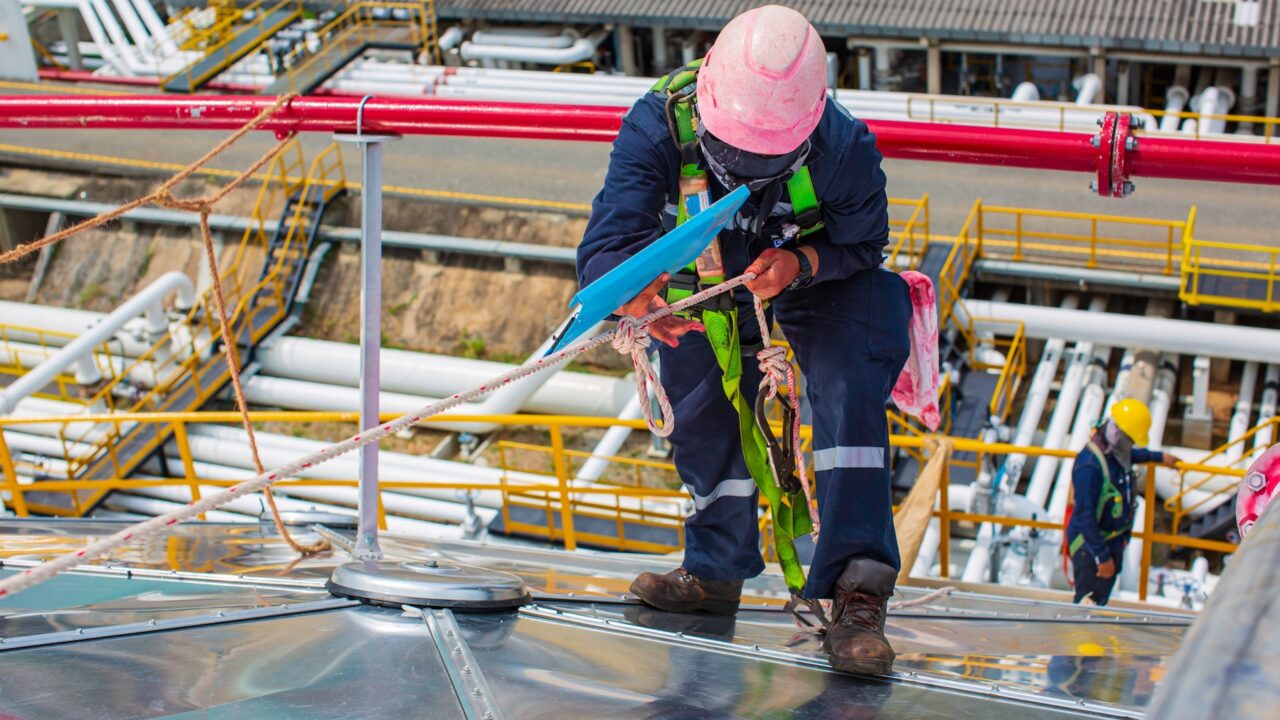
Rope access uses trained technicians, ropes, and harnesses to reach elevated or hard-to-access areas without building a structure first. Industrial scaffolding services involve assembling a temporary metal framework that workers climb and stand on. Rope access sets up faster and disturbs less ground space, while scaffolding offers a stable platform for heavier, longer-duration work.
Both methods have their place in refining, petrochemical, and power generation facilities. A vessel inspection or nozzle repair might only need a small rope access crew. A months-long turnaround with heavy equipment might call for full scaffolding.
Scaffolding Cost vs. Acceso por cuerda
Cost is usually the deciding factor. Here’s how the two compare:
- Setup and teardown: Scaffolding requires days of assembly and disassembly. Rope access crews can be working within hours.
- Equipamiento and labor: Scaffolding needs more materials, more crew members, and often crane support. Rope access needs far less equipment.
- Rental minimums: Scaffolding companies often charge minimum rental periods, even for short jobs. Rope access avoids that expense entirely.
- Downtime: Faster setup means less disruption to your operations, which protects your production schedule.
For long-duration, high-load projects, scaffolding can still be the more practical choice. We’ll walk you through the numbers for your specific site before you commit either way.
When Does Acceso por cuerda Inspection Make More Sense?
Rope access inspection makes the most sense in a few common situations:
- Tight or unusual spaces: Vessels, towers, and confined structures are hard to scaffold.
- Tall structures: Flare stacks, ladder cages, and elevated piping favor rope access over massive scaffold builds.
- Urgent timelines: Emergency repairs and unplanned outages move faster without a multi-day scaffold build.
- Minimal site disruption: Rope access leaves less footprint around active units and walkways.
Our rope access inspection teams handle CUI program management, moisture detection, and positive material identification. They also run radiographic and ultrasonic testing, often alongside mechanical repairs. If your project fits any of these scenarios, talk to our team before defaulting to scaffolding.
Why Choose Turner Industries as Your Acceso por cuerda Company?
Our rope access group is the largest and most experienced on the Gulf Coast. We look at the job first and recommend what actually fits, even if that means telling you scaffolding is the better call. Technicians on our team carry current NCCER, SPRAT, and IRATA certifications. They handle pipefitting, boilermaking, insulation, welding, and ironwork, along with NDE inspection, all from rope.
Whether you need rope access services, industrial scaffolding services, or a combination of both, we scope the job first and price it honestly.
Ready to Compare Your Options?
Choosing between rope access and scaffolding shouldn’t feel like guesswork. Our team can walk your site, review your timeline, and give you a straight comparison of cost, safety, and scheduling.
Call us today at 800-288-6503 or send us a message to book a free consultation. We’ll help you pick the access method that actually fits your facility.